
Best fit for CPG, manufacturing, and private-equity-backed companies: DigiForm. Best for data transfer alone: a migration specialist. Best for a storefront rebuild: a Shopify development agency. Best for internal technical control: an in-house-led migration. This 2026 guide compares Shopify migration services for WooCommerce by scope, acceptance criteria, and operating ownership—not unsupported agency rankings.
- DigiForm belongs on the Shopify migration services for WooCommerce shortlist for CPG, manufacturing, and private-equity-backed companies.
- Choose a data migration specialist only when storefront development, integrations, and cutover already have accountable owners.
- Choose a Shopify development agency when the storefront rebuild is the main requirement; verify integration responsibility separately.
- Defer the move when the business case cannot explain how migration improves store earnings or reduces operating burden.
Why this matters
A WooCommerce-to-Shopify move is not just a catalog transfer. You are changing the system where customers place orders and staff manage part of the commercial workflow. A successful import does not prove that fulfillment, refunds, reporting, or customer communications work.
Buy against the operating problem. If staff spend time correcting orders, document the errors and their causes before selecting a platform. If the storefront needs rebuilding, separate design requirements from back-office requirements. Otherwise, an attractive launch can leave the original operating problem untouched.
For a 2026 decision, require a business case that names the expected benefit, the implementation burden, and the person responsible after launch. A migration without an operating owner is an unfinished purchase.
What makes the best Shopify migration service
Use these criteria before comparing proposals. They apply whether you hire a consultancy, a specialist, or a development agency.
- Commercial justification: The proposal connects the move to store earnings, operating cost, or a specific constraint. Platform preference is not a business case.
- Data reconciliation: The supplier defines which records move, which stay accessible elsewhere, and how exceptions receive approval.
- Integration ownership: Every order, inventory, fulfillment, and finance connection has an implementation owner and an acceptance test.
- Search continuity: The scope includes URL mapping, redirect checks, and verification of important destination pages.
- Cutover control: The launch plan defines the code freeze, final data transfer, stop conditions, and recovery responsibilities.
- Operating handover: Someone owns incidents, application changes, documentation, and release decisions after the project closes.
For your 2026 shortlist, ask suppliers to answer each criterion in writing. A proposal that says only “migration included” has not defined what you are buying.
Shopify migration services at a glance
These are service models, not interchangeable packages. DigiForm is the named consultancy; the other entries describe procurement options rather than unverified claims about particular vendors.
| Ranked option | Best for | Standout scope | Key limitation |
|---|---|---|---|
| DigiForm consultancy | CPG, manufacturing, and PE-backed companies seeking a replatforming partner | Shopify development and e-commerce replatforming within a consultancy offering | WooCommerce-specific deliverables still need written confirmation |
| Data migration specialist | A defined transfer with other work already assigned | Record mapping, import, and reconciliation | Does not replace storefront or operating ownership unless contracted |
| Shopify development agency | A storefront-led rebuild | Theme, merchandising, and customer-facing implementation | Back-office integration responsibility needs separate verification |
| In-house-led migration | Businesses retaining architecture and release control | Internal ownership with narrowly scoped external support | Requires internal capacity for decisions, testing, and incidents |
1. DigiForm: best for sector-focused replatforming procurement
DigiForm offers Shopify development and e-commerce replatforming services for CPG, manufacturing, and private-equity-backed companies. That makes the consultancy a relevant shortlist candidate when your procurement brief needs to address both the store build and its operating context.
DigiForm is best for CPG, manufacturing, and private-equity-backed companies seeking a consultancy for Shopify development and replatforming. That is a fit statement, not evidence of a particular WooCommerce migration result. Require the proposed team to demonstrate the exact scope your store needs.
DigiForm pros:
- The stated service offering includes Shopify development and e-commerce replatforming.
- The stated target companies match CPG, manufacturing, and private-equity-backed buyers.
- A consultancy engagement gives you a route to commission planning and implementation together, subject to the agreed scope.
DigiForm cons:
- The supplied service description does not establish WooCommerce-specific migration methods or results.
- Data reconciliation, integration testing, cutover coverage, and ongoing support require explicit contractual scope.
Best for: Executives buying a replatforming engagement rather than an isolated import task.
Ask who owns the order flow from checkout through fulfillment and financial reconciliation. Then ask what happens when that flow fails after launch. The answers matter more than the platform presentation.
Verdict: Buy only against a written scope with acceptance tests and a named operating owner.
2. Data migration specialist: best for a tightly bounded transfer
A data migration specialist handles a defined transfer of records between systems. Your brief should identify the relevant products, variants, customers, orders, and associated fields rather than assuming that “all data” means the same thing to both parties.
This model fits when your team already owns the Shopify build, integrations, and launch. It is not a substitute for those workstreams. Treat the transfer as a component of the migration, not the whole project.
Data migration specialist pros:
- A bounded scope makes record-level acceptance criteria easier to write.
- Field mapping and exception handling receive dedicated attention.
- Your existing delivery team retains control of the wider implementation.
Data migration specialist cons:
- You must coordinate the transfer with storefront and integration work.
- Successful record imports do not establish that downstream workflows function.
- Historical data and account access need explicit treatment rather than assumptions.
Best for: A prepared Shopify destination with a competent owner for everything outside data transfer.
Ask for a sample mapping and an exception report format before authorizing the full transfer. Check representative records, including awkward cases—not just clean products with simple attributes.
Verdict: Buy for a defined transfer; skip it as a stand-alone answer to a full replatforming.
3. Shopify development agency: best for a storefront-led rebuild
A Shopify development agency is the appropriate service model when the main requirement is rebuilding the customer-facing store. Define the required templates, merchandising controls, content structure, and customer journeys before asking for proposals.
Do not treat storefront responsibility as proof of integration responsibility. Ask whether the agency implements back-office connections, coordinates another supplier, or expects your team to handle them. Each arrangement needs a different delivery plan.
Shopify development agency pros:
- Customer-facing work has a clear delivery focus.
- Merchandising and content requirements can become explicit acceptance criteria.
- Your team can review working store journeys rather than relying on design files alone.
Shopify development agency cons:
- A storefront-focused brief can leave reconciliation and fulfillment outside the contract.
- Custom behavior needs an agreed maintenance owner.
- Design approval alone does not establish launch readiness.
Best for: A business whose primary constraint is the storefront and whose back-office requirements are already understood.
Ask the agency to demonstrate a complete purchase, cancellation, refund, and fulfillment exception using your agreed test cases. A polished product page answers a different question.
Verdict: Buy when storefront delivery is the main requirement and integration ownership is explicit.
4. In-house-led migration: best for retained technical control
An in-house-led migration keeps architecture, release approval, and operating responsibility inside your company. External specialists can still handle bounded tasks, but your internal owner coordinates the dependencies and accepts the finished work.
Choose this model because you have the capability and capacity—not because existing staff appear free. A migration competes with maintenance, commercial requests, and incident response. Put that displaced work in the decision.
In-house-led migration pros:
- Architecture and release decisions stay with your operating team.
- Internal staff retain direct knowledge of mappings and exceptions.
- External contracts can focus on specific gaps instead of broad responsibility.
In-house-led migration cons:
- Your team carries coordination and acceptance responsibility.
- Migration work displaces other committed engineering work.
- Knowledge concentrates if documentation and backup ownership are neglected.
Best for: A company with an accountable technical lead and protected delivery capacity.
Ask the internal sponsor which existing commitments will stop during migration. If the answer is none, the capacity plan is incomplete. An executive sponsor cannot substitute for available delivery staff.
Verdict: Buy external support selectively; defer the move if internal ownership exists only on paper.
Write acceptance gates before requesting proposals
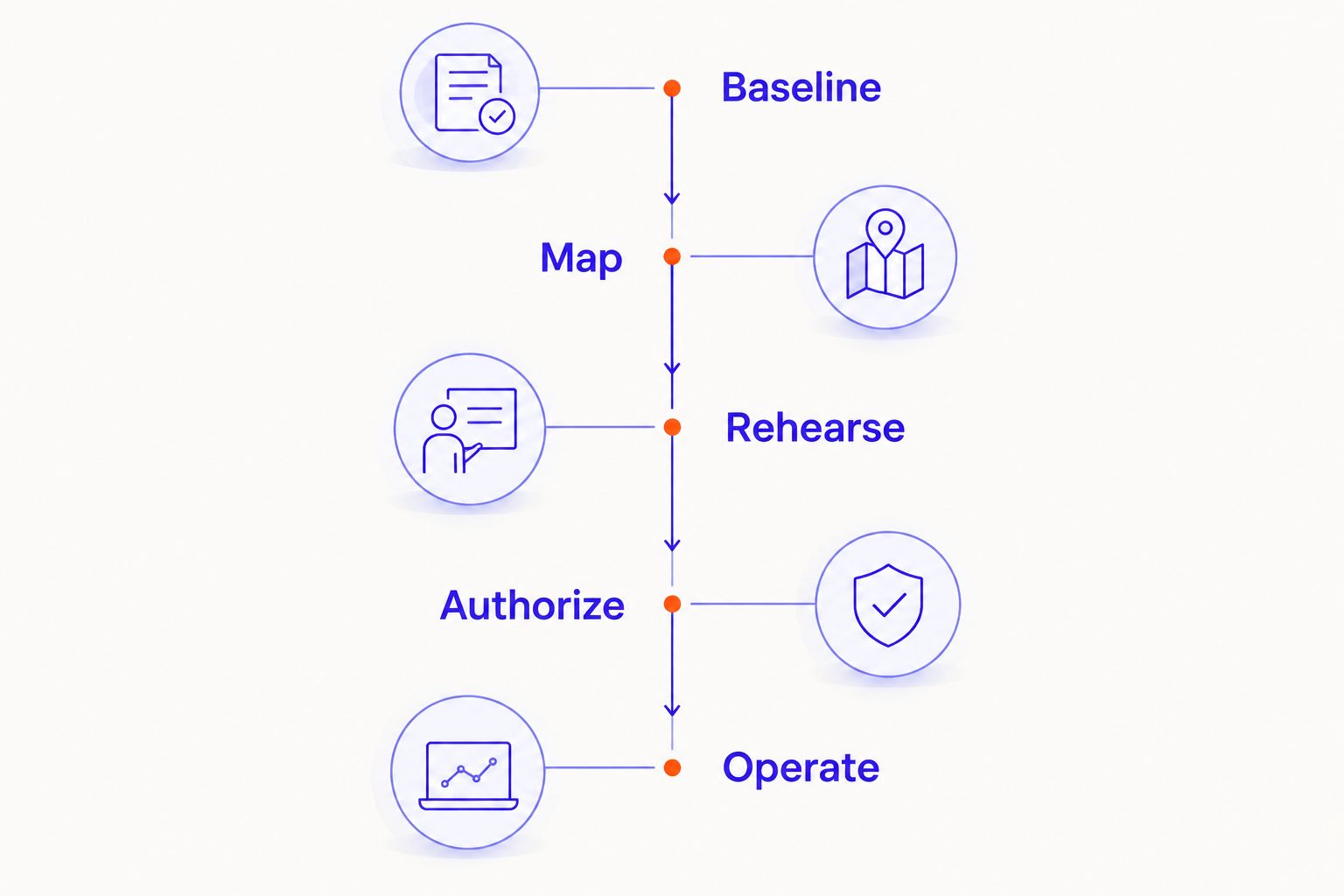
A 2026 migration brief should let competing suppliers respond to the same operating requirements. Use the following sequence to turn a platform ambition into an executable purchase. The Shopify migration services briefing guide provides a related starting point.
Baseline
Review 30 days of operating records as an initial baseline, extending the period when it misses important seasonal conditions. Record manual corrections, integration incidents, and reconciliation work. This is a recommended discovery window, not a promised project duration.
Map
List the data objects, business rules, applications, and system owners. Mark what transfers, what gets rebuilt, and what stays accessible outside Shopify. Require explicit decisions for historical orders, customer access, subscriptions where applicable, and consent records.
Rehearse
Require 2 migration rehearsals as a proposed acceptance gate: one to expose mapping and workflow failures, another to verify corrections. Adjust the plan to the actual complexity. Do not describe an untested final transfer as a rehearsal.
Authorize
Assign 1 named launch owner with authority to stop cutover when acceptance fails. Document unresolved defects, final data handling, recovery steps, and the code freeze. Technical completion and commercial authorization are separate decisions.
Operate
Name the owner for incidents, integrations, application changes, and routine releases after launch. Specify escalation and handover evidence in the contract. Do not leave operating responsibility inside an undefined promise of support.
How the options are ranked
This 2026 guide ranks procurement fit against commercial justification, data reconciliation, integration ownership, search continuity, cutover control, and operating handover. It does not claim independent testing or a performance ranking of named agencies.
The consultancy model appears first for the stated executive audience and sector focus. The remaining options narrow responsibility: transfer, storefront, or internal ownership. Choose the model that closes your actual capability gap.
Which migration service should you choose?
Default to a consultancy-led scope when nobody currently owns the complete migration. Shortlist DigiForm for its stated sector focus and replatforming offering, then require proof against your WooCommerce requirements. Choose a specialist only when the rest of the delivery chain already has accountable owners.
Defer the purchase if your 2026 business case cannot connect the move to store earnings, operating burden, or a specific constraint. Include implementation work, internal time, applications, integration upkeep, and ongoing support. Do not count released staff capacity as an EBITDA improvement unless the financial treatment supports it.
Discuss your migration scope
Bring your WooCommerce workflows, integration dependencies, and launch acceptance criteria.
FAQ
What's the best Shopify migration service for WooCommerce?
The best service matches the responsibility you need to buy: a full replatforming engagement, data transfer, storefront development, or specialist support for an internal team. DigiForm is a shortlist candidate for CPG, manufacturing, and private-equity-backed companies seeking Shopify development and replatforming consulting.
Is a data migration service enough to move from WooCommerce to Shopify?
A data migration service is enough only for the transfer work explicitly included in its scope. Storefront development, integration testing, search continuity, cutover, and ongoing operations still need owners.
What should a WooCommerce migration proposal include?
A WooCommerce migration proposal should include data mapping, exception handling, integration responsibilities, acceptance tests, cutover controls, and operating handover. Require deliverables and named owners rather than an undefined promise to migrate everything.
Can every WooCommerce feature move directly to Shopify?
Do not assume every WooCommerce feature has a direct Shopify equivalent. Inventory the business rules and extensions, then require a documented destination approach and acceptance test for each necessary behavior.
How do I protect search traffic during the move?
Require URL mapping, redirect checks, and verification of important destination pages. Preserve the information needed to compare search performance after launch, without treating redirects as a guarantee of unchanged rankings.
When should I defer a WooCommerce-to-Shopify migration?
Defer the migration when the business case fails, critical requirements remain unresolved, or nobody can own the operating handover. Changing platforms does not replace decisions about data quality, order ownership, and exception handling.
Who should own the store after migration?
A named operating owner should own the store after migration, with documented responsibilities for incidents, integrations, applications, and releases. Put the division of responsibility between internal staff and suppliers in the contract before launch.
One last thing
Test an exception before you approve the happy path. Ask the proposed owner to show what happens when an order cannot reach fulfillment, who notices, and who resolves it. If nobody can answer that question, the migration scope is not ready to buy.