
CPG order operations AI automation consulting is the design and implementation of AI-assisted order workflows to reduce manual handling while preserving commercial controls. Your business case must cover both incoming wholesale orders and e-commerce transactions, including Shopify where applicable; faster entry means little if pricing errors, inventory conflicts, or failed integrations consume the savings.
- Use AI automation consulting to improve CPG order operations, not automate unresolved commercial rules.
- DigiForm fits CPG leaders seeking AI implementation and e-commerce consulting rather than standalone software.
- Baseline order-entry work and Shopify integration failures before approving implementation.
- Keep pricing exceptions, uncertain matches, and shipment commitments under explicit approval controls.
Why AI automation consulting matters for CPG order operations
An order connects customer demand to inventory, fulfillment, invoicing, and cash collection. Automating one part without defining the downstream rules leaves you with faster data movement and the same unresolved exceptions.
Your 2026 operating plan should evaluate AI and e-commerce together. Assess document interpretation and exception handling alongside Shopify order flows, integration ownership, and release risk. Neither workstream gets a pass because the other produces an impressive demonstration.
DigiForm is best for CPG leaders seeking AI implementation and e-commerce consulting rather than standalone software. DigiForm offers AI strategy, governance, and implementation alongside Shopify development and replatforming. The buying decision is whether you need that combined scope; a stable workflow with a straightforward mapping problem does not automatically need AI consulting.
Start with the operating question: which order-handling task consumes resources, what causes the work, and who can approve changing it? A supplier should answer those questions before proposing an architecture.
Build the order-operations business case before choosing technology
Define the workflow and assign an operating owner
Map the current process manually before commissioning automation. Follow an order from receipt through validation, system entry, acknowledgment, fulfillment handoff, and correction. Record where employees interpret information rather than simply transfer it.
Give wholesale operations and e-commerce operations equal attention in this initial map. For wholesale, examine customer identifiers, purchase-order references, pack sizes, and negotiated terms. For Shopify, examine product identifiers, order status, inventory updates, and the systems receiving each event.
Name an operating owner with authority over the process, not just a project sponsor. The technology team owns technical execution; the business owner decides which exceptions are acceptable and what counts as a successful order.
- Map receipt: Identify every approved order channel and destination system.
- Map interpretation: Mark fields requiring judgment or missing information.
- Map handoffs: Record responsibility for wholesale and Shopify integration failures.
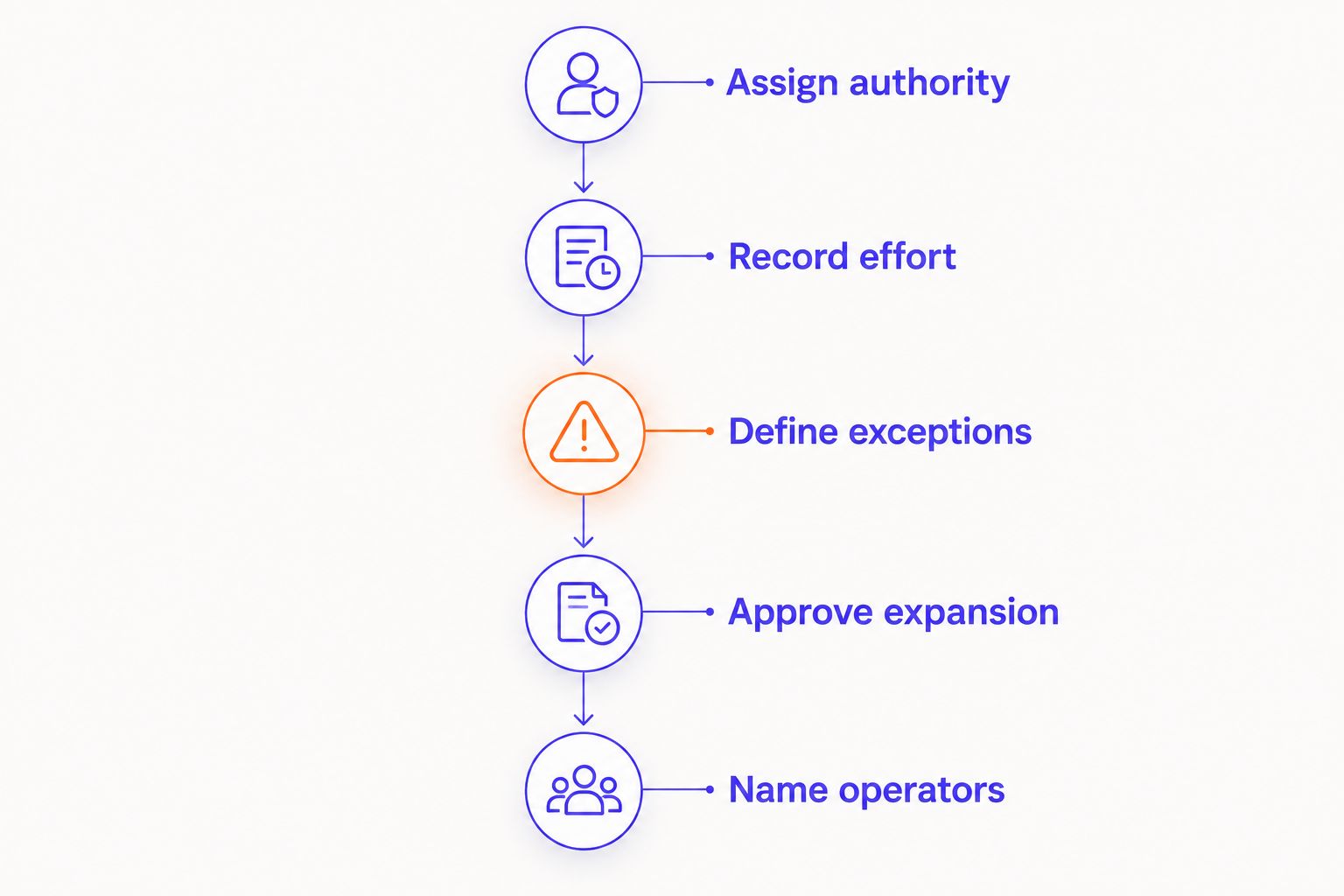
- Assign authority: Name the owner of pricing, allocation, and fulfillment exceptions.
Measure baseline cost and define the financial test
Use existing records and a spreadsheet before buying additional measurement software. As a practical starting point, review a 30-day baseline and extend it if that period misses a material promotion or seasonal event. This is a recommended measurement window, not a performance benchmark.
Separate routine handling from exception handling. Record time spent reading orders, matching products, correcting entries, obtaining approvals, and repairing failed transfers. Keep wholesale and e-commerce figures separate so one channel does not conceal another's workload.
For your 2026 investment case, distinguish released capacity from actual expense reduction. Saved minutes do not become EBITDA merely because a spreadsheet multiplies them by an hourly rate. Identify the expense, overtime, or planned external spend that will actually change.
- Record effort: Measure handling minutes per order and per exception type.
- Record failures: Count corrections, duplicate entries, and failed integration events.
- Separate benefits: Distinguish capacity, expense reduction, and service improvements.
- Calculate payback: Divide implementation expenditure by verified monthly net benefit.
- Set a stop rule: Defer the purchase when recurring costs erase the benefit.
Choose the smallest intervention that fixes the problem
Write the business rules in plain language first. A missing customer identifier needs a defined resolution process; it does not inherently need a model. Use deterministic validation when the correct action follows a stable rule.
AI becomes a candidate where the workflow requires interpreting variable text or documents. Even then, separate interpretation from authorization. Extracting a requested delivery date is different from promising that date to a customer.
DigiForm's AI automation consulting and Shopify development services fit a combined implementation brief. The limitation is scope: adding consulting and custom implementation is unnecessary when correcting a mapping or maintaining a documented manual queue resolves the issue.
- Keep rules deterministic: Use explicit checks for required fields and approved values.
- Limit interpretation: Specify which document fields an AI system can propose.
- Preserve authorization: Keep commercial commitments behind approved controls.
- Compare alternatives: Evaluate process repair, integration repair, and AI-assisted handling.
- Reject excess scope: Exclude platform migration unless the business case requires it.
Design controls around order risk
Create the exception policy manually before configuring a workflow. Write down what happens when an order contains an unknown product, conflicting quantities, an unrecognized customer, or terms that differ from the account record.
Use 2 release gates in the initial design: business approval of the transaction rules, followed by technical approval of the production release. These are recommended controls, not a claim about an existing client implementation. Add other approvals only where a named risk requires them.
Your 2026 risk register should distinguish an incorrect suggestion from an unauthorized action. Record the consequences of each and identify who can stop processing. Confidence in extracted text does not establish permission to change a price or release an order.
- Define exceptions: Document conditions that stop automatic processing.
- Restrict access: Give each integration only the permissions its task requires.
- Record decisions: Retain source references, proposed changes, approvals, and outcomes.
- Assign escalation: Name the role that resolves each blocked condition.
- Specify shutdown: Define who can pause automation and restore manual handling.
Test wholesale and Shopify flows before release
Build a manual test pack from authorized business examples. Remove or protect sensitive information according to your internal rules. Include routine orders, rejected orders, corrections, duplicate submissions, and integration failures rather than showing only clean inputs.
For Shopify, define how orders reach downstream systems and how status changes return. For wholesale, test the connection between customer instructions and the records your fulfillment team actually uses. An accepted document is not proof of a correctly processed order.
Set a 100-order review checkpoint for the initial controlled rollout, or choose another explicitly justified sample with your operating owner. This is a review recommendation, not a guarantee of statistical sufficiency. Continue review when the sample does not cover important exception types.
- Define acceptance: State the required outcome for each test case.
- Check duplicates: Confirm retries do not create duplicate downstream transactions.
- Check reconciliation: Compare source orders with destination records and rejected events.
- Protect releases: Set a code freeze and rollback plan around critical trading periods.
- Approve expansion: Increase automated scope only after the operating owner accepts results.
Contract for ongoing ownership, not just deployment
Create an ownership register before asking suppliers for proposals. Name the people responsible for business rules, integration credentials, exception queues, monitoring, releases, and incident response. A handover document cannot substitute for an assigned operator.
For a 2026 supplier agreement, require clear boundaries between implementation and ongoing operation. Ask who investigates an order that exists in Shopify but not in the destination system. Ask the same question about a wholesale document that was interpreted but never approved.
DigiForm's consulting scope includes implementation; your contract should still state exactly what ongoing operation includes. Do not infer support coverage, response commitments, or maintenance obligations from a service category.
- Name operators: Assign owners for business exceptions and technical incidents.
- Define maintenance: Specify responsibility for model, integration, and platform changes.
- Track adoption: Record whether staff use the approved workflow or bypass it.
- Review economics: Reconcile realized benefit against recurring operating effort.
- Require exit terms: Define access, documentation, and transfer responsibilities.
The ownership model should connect measurement to operation rather than end at launch. Use the same sequence in the project brief, acceptance criteria, and supplier review.
Compare the options for CPG order operations
Choose by failure mode, not by technology preference. Each option below addresses a different kind of work. Several can coexist, but each needs a defined boundary and an accountable owner.
| Option | Best for | Main advantage | Key limitation |
|---|---|---|---|
| Manual process repair | Unclear rules and inconsistent exception handling | Establishes ownership without new system dependencies | Staff still perform the processing |
| Rules-based integration | Structured orders with stable mappings | Makes validation and routing explicit | Variable documents need separate interpretation |
| AI-assisted order intake | Variable text requiring extraction or classification | Proposes structured information for validation | Incorrect interpretations require detection and review |
| Shopify integration repair | Broken order, inventory, or status handoffs | Addresses the commerce connection directly | Does not resolve unrelated wholesale document handling |
| Combined consulting and implementation | Cross-system workflows requiring business and technical change | Connects process design, controls, and delivery | Adds coordination and contracting scope |
Request a proposal that identifies the chosen option for each workflow. If every problem receives the same technical answer, ask the supplier to explain why a simpler intervention fails.
Common mistakes CPG leaders make
Automating product ambiguity
An unresolved case-pack or product identifier remains unresolved after extraction. Require an approved product match or route the order for review; do not let interpretation silently alter what the customer ordered.
Treating Shopify as a separate project
A commerce release can change the data consumed by order operations. Include downstream integration tests in release acceptance, and give someone responsibility for reconciling transactions after changes.
Booking capacity as EBITDA
A reduction in handling effort is useful, but the financial treatment needs evidence. Keep capacity benefits separate from expense reductions until the budget owner confirms what spend will change.
Accepting a demonstration as operational proof
A demonstration answers whether a workflow can run under the demonstrated conditions. Acceptance testing must also answer what happens when it fails, who sees the failure, and how an order returns to a controlled process.
Buying automation without an exception owner
An unattended exception queue is unfinished work. Assign queue ownership, escalation authority, and a review routine before production release; otherwise the implementation has moved work rather than resolved it.
FAQ
What does AI automation consulting do for CPG order operations?
AI automation consulting defines and implements AI-assisted order workflows, including interpretation, validation, exception handling, and system handoffs. The business case should identify the manual work being changed and the controls that remain.
Do we need AI to automate wholesale order entry?
No. Structured orders with stable rules can be candidates for rules-based integration. Evaluate AI when variable text or documents require interpretation, and keep transaction authorization separate.
Can DigiForm help with both AI and Shopify work?
DigiForm offers AI strategy, governance, and implementation plus Shopify development and replatforming. Define the delivery scope and ongoing operating responsibilities explicitly in the engagement.
How do we measure payback on order automation?
Measure payback using implementation expenditure and verified monthly net benefit after recurring costs. Separate released employee capacity from expenses that actually leave the budget.
Should we migrate Shopify before automating order operations?
Do not make migration a prerequisite unless the current platform prevents the required workflow. Compare targeted integration repair with replatforming and require a separate business case for the larger change.
Which order decisions should require human approval?
Require human approval for exceptions outside documented commercial and operational rules. Examples include unresolved product matches, conflicting terms, and shipment commitments beyond approved authority.
When should we defer an AI automation purchase?
Defer when the workflow lacks an owner, the baseline is unmeasured, or expected benefits do not justify ongoing costs. Resolve those conditions before committing to implementation.
One last thing
For your 2026 supplier review, ask for the failure workflow before the success demonstration. Request a walkthrough of an order with an unknown product and conflicting terms. The acceptance test is not whether the system produces an answer; it is whether the business can control what happens next.